



Nov 01, 2026 I Julian Vale
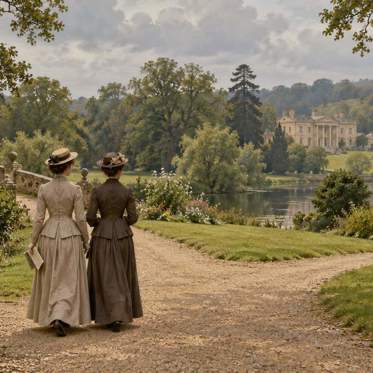
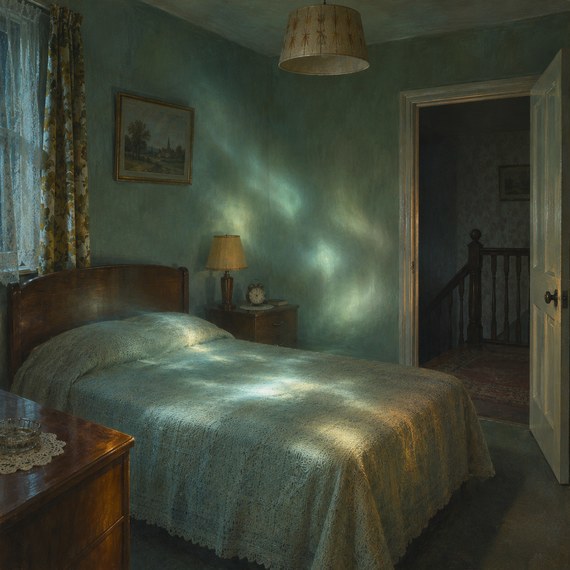
Gladys Tucker saw a man's shadow on the landing. Her daughter Beryl reported strange lights across her bed and bedroom wall. Other things in the family's Swindon council house seemed to have acquired a life of their own: objects moved, windows were found open after being shut, and door handles rose and fell without anyone touching them. By April 1966, the Tuckers were asking for something more practical than an explanation. They wanted another home.
The Daily Mirror reported that Herbert Tucker had written to the council, police had been called and electricity board staff had checked the house. The family were eventually moved two miles away, while a clergyman was expected to visit their old property. Two days after the first report, the newspaper carried a striking sequel. Other families wanted the supposedly haunted house. With more than a thousand households on the waiting list, a reputation for ghosts was evidently a risk some prospective tenants were prepared to take.
The two reports place an extraordinary experience inside a very ordinary problem. A house can be someone's refuge, someone else's intolerable place of fear, and another person's desperately wanted opportunity.
Sixty years later, the same awkward meeting between haunting and housing has surfaced in official correspondence. In September 2026, the Information Commissioner's Office ruled that Southampton City Council had wrongly relied on the Freedom of Information Act's vexatious-request provision to refuse questions about tenants reporting paranormal activity. The request concerned complaints, applications for rehousing, summaries of cases, and any guidance on how such matters were handled. Its subject was unusual, but that alone did not dispose of the council's responsibility to answer.
Reporting on the ruling in October, Local Democracy Reporter Maria Zaccaro described the council's argument that searching thousands of records would impose a substantial burden. The commissioner was not persuaded by its case for using that particular exemption. Southampton subsequently said it had issued a revised response. The exchange shows how far a question about frightened tenants can travel: from someone's home to a council's records department, then into a formal dispute over the public's right to know.
Four requests in Dover
Dover District Council's published response to a similar enquiry is much shorter. Asked whether it had received formal requests for rehousing or transfer because of alleged ghosts, hauntings or other supernatural occurrences, it answered yes. Asked for the number over the last ten financial years, or the period for which records were available, it answered four. All had been offered support, and three tenants had moved. The fourth was a current case, with the tenant away from the property for other reasons.
Behind Dover’s brief answer are four households for whom a supernatural disturbance became a reason to seek another home. The encounters remain private, but their consequences entered the council’s ordinary work of providing somewhere to live. A transfer request marks a significant point in a haunting story: the moment someone decides the place they should feel safest has become somewhere they need to leave.
The brevity is oddly suggestive. Four households appear as a number, with almost everything that would make their experiences recognisable stripped away. That is appropriate for private housing records, but it leaves a gap between the official answer and the lives behind it. We know nothing of the first incident, the attempts to explain it, or the moment someone decided that changing address might be the only satisfactory response. Those details survive more readily when a family speaks to a reporter or an investigator visits the house.
The visitors who stayed with the story
In Enfield in 1977, a frightened household acquired more visitors than most. Peggy Hodgson and her children reported knocks, moving furniture and objects apparently thrown through rooms. Neighbours became involved, followed by police, journalists and psychical researchers. The Society for Psychical Research's account records a policewoman's report of a chair moving across the floor without anyone touching it. A council house became the setting for an investigation whose photographs and recordings would continue circulating long after the disturbances had subsided.
Reporter Douglas Bence remembers the beginning in terms far removed from later films. A neighbour telephoned the Daily Mirror because the family were terrified and needed help. Bence went with photographer Graham Morris, who was struck by a Lego brick during their first visit. They returned on subsequent nights. Another Mirror reporter, George Fallows, helped bring the case to psychical researchers’ attention, and Maurice Grosse became a central figure in the investigation.
Bence's recollection also carries a frustration familiar in stories that become famous. He maintains that unexplained things happened, while objecting to the scale of later dramatic embellishment. The house he entered was a home occupied by a family, with contemporary television posters on its walls. The public version eventually became a recognisable horror setting. Somewhere between those two descriptions, the experience of needing help can be overshadowed by the demands of a much more marketable story.
A later household added a quieter chapter. After Peggy Hodgson’s death in 2003, Clare Bennett and her children briefly occupied the property. Bennett described feeling uncomfortable and watched; her sons reported waking to voices downstairs. They left after two months. Their story gives Enfield a different unease: night sounds and the sense of a presence that can make a house difficult to live in, even without the spectacular disturbances that made it famous.
Enfield shows how differently a haunting can enter the lives of people who share its address. A house can remain a home for years after events that make outsiders regard it with dread. Another family can feel compelled to leave after a short stay. The place connects the accounts, while each household brings its own experience of what it means to close the door there at night.
A new home before Christmas
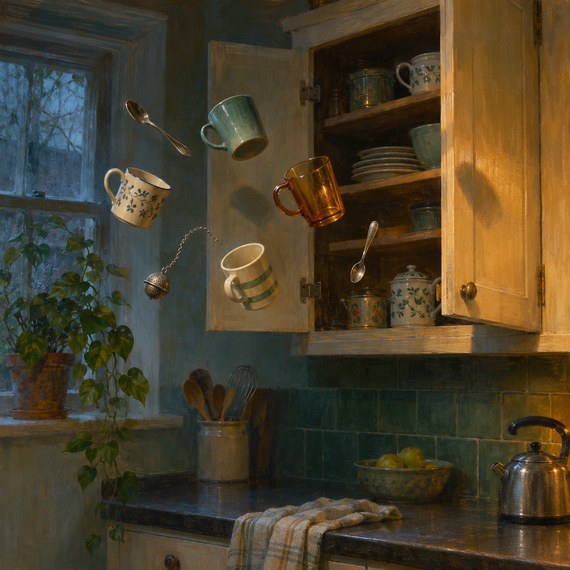
In December 2024, a haunting allegation reached Ireland's High Court through another family's search for suitable accommodation. Louise and Thomas Stokes had brought proceedings over mould at their former council home in County Leitrim. They accepted a replacement property in October, but Louise subsequently told Mr Justice Garrett Simons that doors, a table and chairs were moving before the family's eyes. While preparing food for her children, she said, objects had flown out of a cupboard she opened.
According to Paul Neilan's court report, she had contacted the previous occupant and received a letter she found deeply distressing. Its contents were not set out in the report. The judge struck out the existing proceedings because they concerned the first property, which the family had left. A request for a third house would require a new application to the local authority. That decision settled the scope of the case before him; it did not resolve what Louise said had happened in the kitchen.
The account ends at an especially uncomfortable point. The family had already moved to escape one reported problem and were now describing another, of a wholly different kind. The court could address the application actually brought before it. The council could receive a further request. Neither process supplied the family with an immediate account of the moving furniture they described. The ordinary machinery of a housing dispute carried on around an extraordinary allegation.
Across these cases, the most persistent connection is the search for someone able to help. Herbert Tucker wrote a letter. An Enfield neighbour called a newspaper. Dover tenants made transfer requests. Louise Stokes raised her family's fear in court. The routes differ because a haunting has no obvious front desk. A police officer may attend, an electrician may inspect, a minister may visit, or an investigator may sit through the night. None necessarily has the means to provide the thing an occupant wants most: confidence that the house will feel safe when everyone else has gone.
The less familiar households deserve a place beside the famous haunted addresses. A council’s brief response may be the only public trace of a disturbance that never attracted an investigator or camera crew. Those experiences still had consequences. Someone approached an authority, explained a fear that can be difficult to put into words and asked for the chance to begin again in another house.
The people who leave and the people prepared to move in need never agree about a haunting. Whatever explanation they favour, the decision has a consequence more tangible than a place in a book of ghost stories: someone must go through the door and make a home there.
That need for safety gives the accounts a life beyond the moments investigators usually collect. An encounter can be over while its effect on a household continues. The landing must still be crossed, the bedroom used and the kitchen entered to prepare another meal. Asking to move makes the fear part of a decision about the future. The family is trying to recover the ordinary ease of living somewhere, the feeling that a closed door separates home from whatever might trouble them outside it. When a reported presence seems to be within the house itself, that comfort can become difficult to regain.
Further Reading
- Southampton haunting request ruling
- Southampton council response
- Dover rehousing response
- The Swindon haunting reports
- Douglas Bence on Enfield
- The Enfield poltergeist
- The Leitrim housing case
For another unsettling encounter inside an ordinary home, the Plus+ extension of episode 27.16 explores a modern poltergeist case. Join Mysterious Universe Plus+ at the Max tier to stream the extended episode and explore the available back catalogue.
Trending Podcasts
-
 36.13 I MU Podcasts
36.13 - MU Podcast - MU Interviews - Charlie Robinson - 002
-
-
 36.14 I MU Podcasts
36.14 - MU Podcast - The Tayos Caves Mystery Part 1
-
 36.16 I MU Podcasts
36.16 - MU Podcast - Beneath the Pyramids
-
-
 36.12 I MU Podcasts
36.12 - MU Podcast - The Skill Trap | Outsourcing Ourselves
Latest Articles
Rowan Ashford covers strange creatures, hauntings and local legends. He takes a particular interest in older reports and the details that disappear as stories pass from one teller to the next.
Previous article
Related Articles